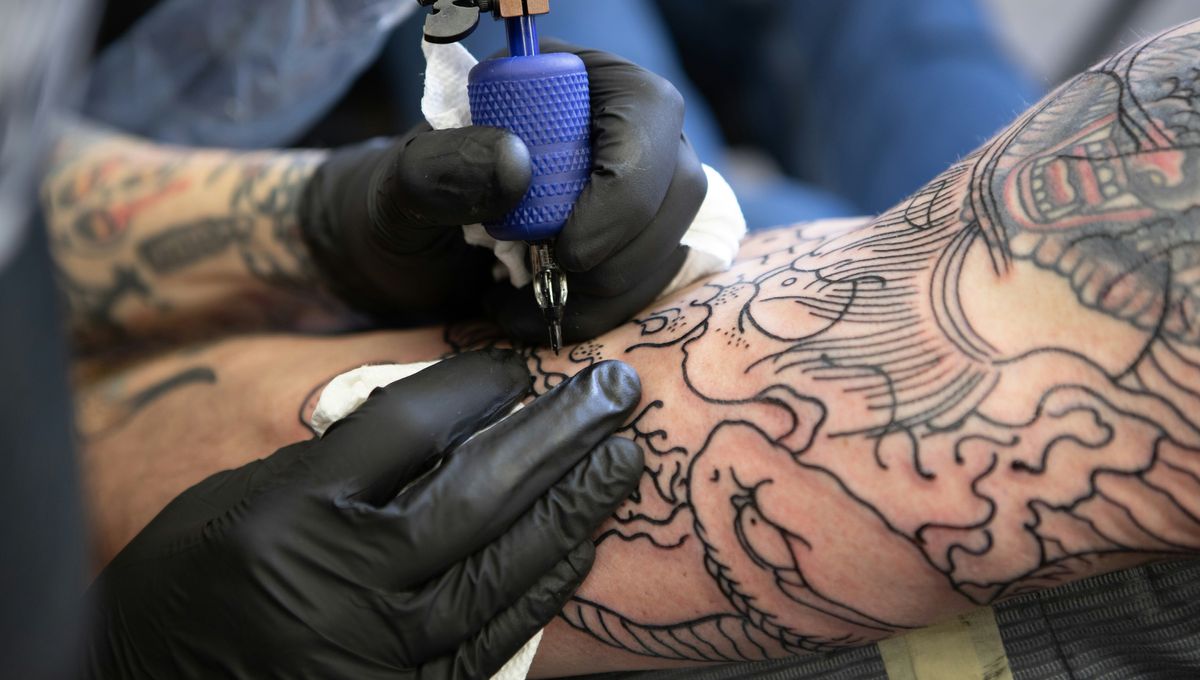
Getting a tattoo could increase your risk of developing skin cancers or lymphoma later in life, according to the results of a new study. Looking at pairs of twins, the researchers found that siblings with more ink tended to have higher rates of these illnesses.
ADVERTISEMENT
“The unique aspect of our approach is that we can compare twin pairs where one has cancer, but they otherwise share many genetic and environmental factors,” said study author Jacob von Bornemann Hjelmborg in a statement.
Using data from the Danish Twin Tattoo Cohort, the researchers began by looking at cancer diagnoses in 2,367 randomly selected pairs of twins. Within this group, they found that tattooed individuals were 3.91 times more likely to develop skin cancer than their un-tattooed twin.
The study authors then conducted another analysis using data from 316 Danish twins born between 1960 and 1996, in which at least one sibling had previously been diagnosed with cancer. Among this cohort, the odds of a skin cancer diagnosis were 1.62 times higher in tattooed individuals.
Moreover, twins with large tattoos – defined as those covering an area greater than the size of the palm of a hand – were 2.37 times more likely to develop skin cancer and 2.73 times more likely to be diagnosed with lymphoma.
The researchers believe that this elevated risk may be caused by tattoo ink being transferred from the skin to the blood, before accumulating in regional lymph nodes. These nodes are a key component of the immune system that help to rid the body of harmful substances.
“We can see that ink particles accumulate in the lymph nodes, and we suspect that the body perceives them as foreign substances,” said study author Henrik Frederiksen. “This may mean that the immune system is constantly trying to respond to the ink, and we do not yet know whether this persistent strain could weaken the function of the lymph nodes or have other health consequences.”
ADVERTISEMENT
A similar mechanism can sometimes cause a rare type of lymphoma in some people with breast implants. The researchers think that tattoo ink could set off chronic inflammation in the lymph nodes, potentially leading to abnormal cell growth and increased cancer risk.
Commenting on the team’s findings, study author Signe Bedsted Clemmensen said that “the bigger the tattoo and the longer it has been there, the more ink accumulates in the lymph nodes.”
“In our study, we do not see a clear link between cancer occurrence and specific ink colors, but this does not mean that color is irrelevant,” she adds. “We know from other studies that ink can contain potentially harmful substances, and for example, red ink more often causes allergic reactions. This is an area we would like to explore further.”
The study has been published in the journal BMC Public Health.

Source Link: Tattoos Could Increase Risk Of Certain Cancers, Study On Twins Reveals
