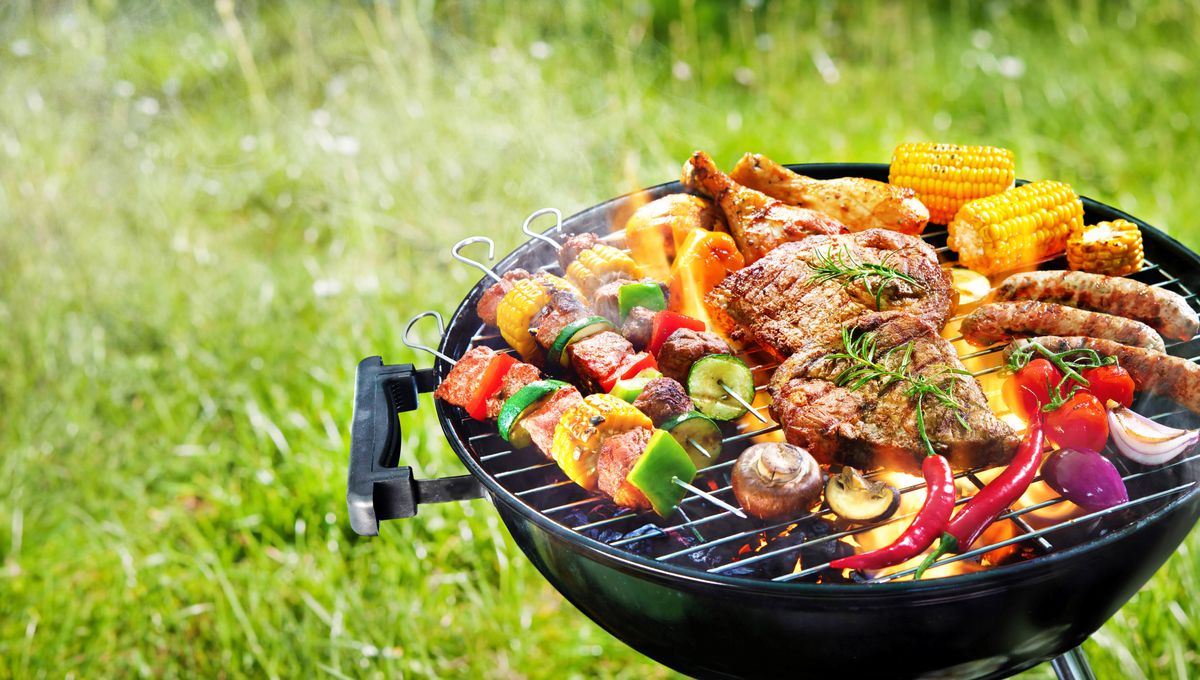
It’s barbecue season, and just the thought of the distinct smoky scent of sizzling food is enough to get many mouths watering (mine is watering as I write these words). And while the idea of cooking food on the grill may seem straightforward, there is actually a lot of chemistry taking place that results in these delicious flavors. Understanding it could well result in the perfect barbecue.
The basics
One of the important factors in producing the rich-tasting food we expect from a barbecue comes from the way it is cooked. Essentially, a barbecue is distinct from other forms of cooking because of the way heat reaches the food. By suspending it on metal grates, the food is cooked through a combination of contact with the hot metal (conduction) and through contact with the naked flames.
This is a different process to simply cooking food in a pan, in which case most of the heat is received from contact with the metal, rather than absorbing heat radiated from the flames. This means that the barbecued food is not only cooked throughout but that the areas touching the grates will become seared and crispy, and it is these crispy bits that make all the difference.
What tastes so good?
Meat on the barbecue, toast, and roast coffee beans all have one thing in common – they have been browned and often have crunchy portions that are full of flavor. This is the result of a chemical reaction called the Maillard reaction, in which reducing sugars react with amino acids to form a complex mixture of molecules that give food that deep aroma and flavor. This reaction only occurs when the exterior of a food product is exposed to higher temperatures than its interior. This is why boiled food doesn’t taste the same.
The Maillard reaction is named after Louis-Camille Maillard (pronounced my-ar) who originally studied it with the intent of finding a cure for diabetes; but while he did not achieve this, it did explain why cooked food tastes so good. This reaction is so complex that scientists are still learning exactly what is involved in it.
Caramelization
Aside from the Maillard reaction, there is also caramelization, which happens when sugars are heated causing them to turn brown. This process applies to both meat and vegetables, where carbohydrates and sugars are turned into compounds like maltol and furan.
The amount of heat needed to create a good taste depends on the sugar itself, which can make it a trickier process to achieve. If done correctly, it can result in nutty, meaty, and caramel-like flavors. However, if the sugars get too hot too quickly, they can create a less-than-appetizing mess that is bitter and disappointing. This is also why we add things like BBQ sauce after the cooking phase, in order to avoid turning the sauce into sticky atrocity.
Thankfully, concerned barbecue-ers can consult this handy table of different sugars complete with the best temperatures to cook them at in order to get the most out of your meal.
A warning on charring
As mentioned above, a good barbecue is characterized by charring the food that comes into contact with the grill. As we know, too much charring can taste pretty rough, but the process also produces chemicals in meat – heterocyclic amines and polycyclic aromatic hydrocarbons – that are carcinogenic. Obviously, the levels found in a botched barbecue are pretty low, but avoiding them can help decrease the chances of developing cancer.
Smoky finishes
The last crucial ingredient for the perfect barbecue is smoke. And while you can enhance the food’s flavor with any fuel – wood, charcoal, or gas – the best results come from the former two. That’s because wood and charcoal both contain organic polymers, especially lignin. It is this polymer that plays the biggest role in the deliciousness of a barbecue. When lignin burns, it releases a range of aromatic products, including methoxy-substituted phenols – guaiacol and syringol – which are responsible for the smoky flavor and smell, respectively.
Once they are released, these aromatic compounds will swirl up with the rest of the smoke and bond to the water and fats in the food suspended above it.
Smoke is obviously potentially dangerous as well, and is also a possible source of carcinogens, depending on what is being burnt. Very little work has been done on whether barbecued food absorbs enough of this smoke to pose a risk to health, but we obviously know that smoke is not great for us. So caution should be considered when enjoying a barbecue this summer.

Source Link: The Chemistry Of The Perfect Barbecue
